
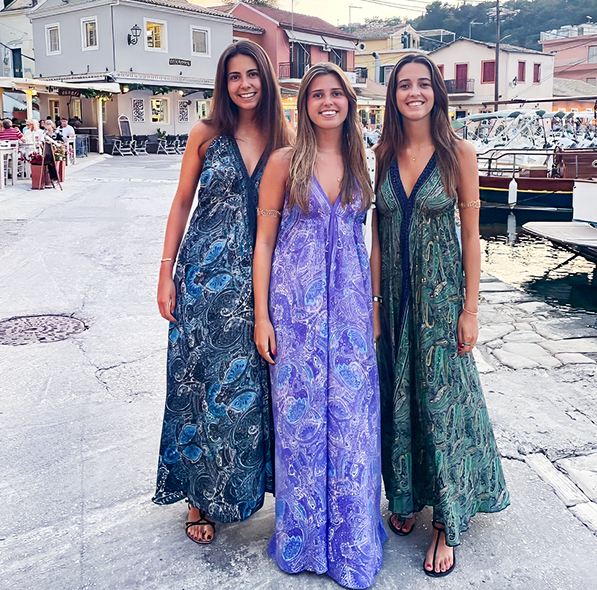
A jacket once worn by a grandfather, a jumper knitted by a great-grandmother, a dress given by a father to his wife… Some garments pass from one generation to the next, becoming much more than ordinary wardrobe items. They carry the memories of those who wore them before us, tell family stories and maintain a connection between generations. Through these testimonies, let us discover the garments that form a true emotional and cultural heritage.
The testimonials featured in this article were collected through the Wardrobe Stories Barometer, an initiative of the European CircuFash project, which invites everyone to share the stories, memories and experiences associated with their clothes.
Clothes that stand the test of generations
In some families, clothes are naturally passed down from mother to daughter, from grandparent to grandchild, or simply from one generation to the next. Their value lies not only in their quality or appearance, but also in the people who wore them before us.
This is the story of a cardigan made many years ago by a great-grandmother. After being worn by the contributor’s grandmother, mother and aunt, it now belongs to the person sharing the story. Despite its age, it remains perfectly wearable and particularly warm. This garment embodies a family history that continues across generations.
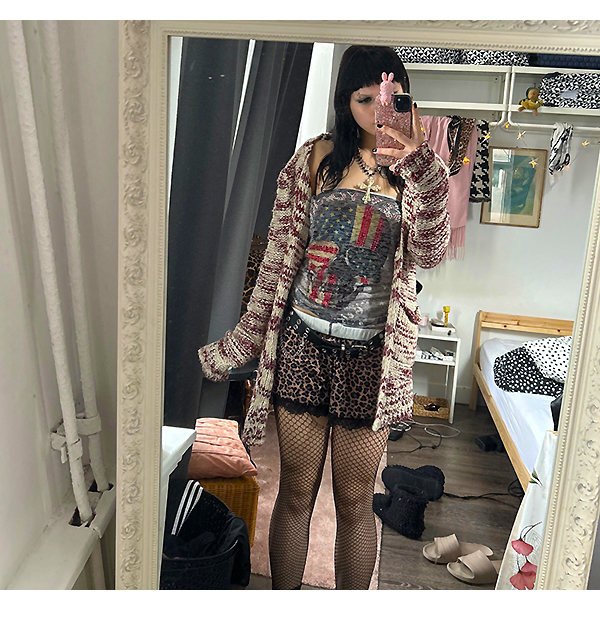
Other testimonies tell similar stories of passing clothes down. A pair of pyjamas worn by three generations of women, a Burberry trench coat passed down from a great-grandmother to her great-granddaughter after being worn by four generations, or a black leather biker jacket successively worn by a mother and grandmother.
These garments have stood the test of time without losing their place within the family. They represent a form of personal heritage, whose value is above all emotional.
This tradition is sometimes woven into everyday family life. One contributor explains: “Most of my clothes are inherited from my grandmother and mother, then shared between my sisters and me. If anything needs adjusting or repairing, my grandmother does it as a hobby.”
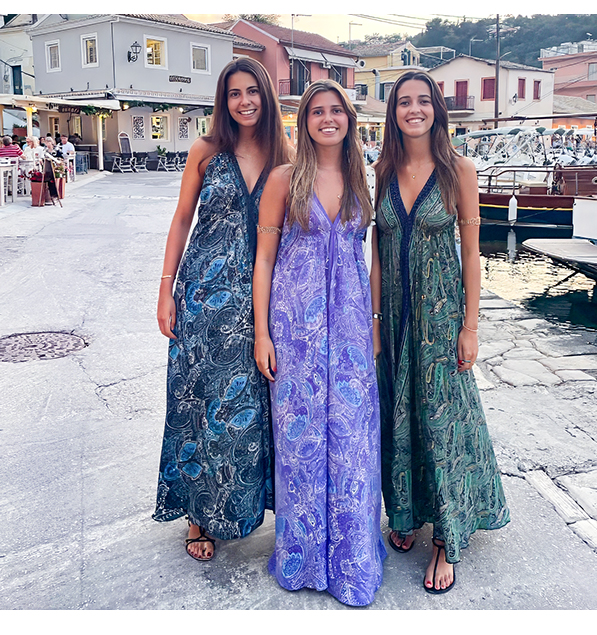
Here, clothes naturally circulate among family members, connection between generations.. What is passed down is not just the garments themselves, but also the habits and relationships that develop around them.
Wearing the clothes of those we love
Inheriting a garment can sometimes mean preserving someone’s presence. Behind a jacket, a coat or a simple jumper lie memories and moments in someone’s life that make the item irreplaceable.
Arielle shares the story of a military jacket that belonged to her husband. In the 1960s, he worked with American surplus goods in Paris and wore the jacket at weekends. He had also been imprisoned during the Algerian War for refusing to go on a mission. Today, Arielle continues to wear the jacket. Its many pockets make it particularly practical, while its cut makes it ideal for mid-season weather. Beyond its practical qualities, however, it is above all a way for her to keep her husband’s memory alive.
Another testimony concerns a jacket that belonged to a grandfather who has since passed away. He bought it when he was a student and took care of it throughout his life, including having it repaired. After his death, his granddaughter received it from her mother and continued looking after it herself. Today, the jacket is a precious family heirloom.
Clothes passed down by parents also hold an important place in these stories. Several people mention jumpers inherited from their mothers, a vest, coats, or even a Levi’s set consisting of jeans and a jacket.
Agathe.R, for example, explains that she inherited all of her grandfather’s woollen jumpers. Their remarkable quality matters, but it is above all their sentimental value that makes it impossible for her to part with them.
Sometimes, a garment does not even need to be worn to retain its significance. Clothes carry the memories of those who wore them before us, tell family stories and maintain a connection between generations. One person carefully keeps in their wardrobe a T-shirt that their father used to wear when they were a child and of which he was particularly proud. When the child grew big enough to wear it, he gave it to them. Now badly worn, the T-shirt remains a treasured memory that is difficult to let go of.
Stories and memories, a connection between generations
Clothing heritage is not limited to garments passed down after someone’s death. Some pieces are associated with family events, important moments in life or particular memories.
Fiori tells the story of a dress and a raincoat that a father gave to his wife. The raincoat, a vintage piece by the brand Raincoat, was bought in London in the 1970s. Loose-fitting, silver and shiny, it comes with a belt. The dress, meanwhile, is a piece by Hershelle Mayfair, distinguished by its striking emerald colour.
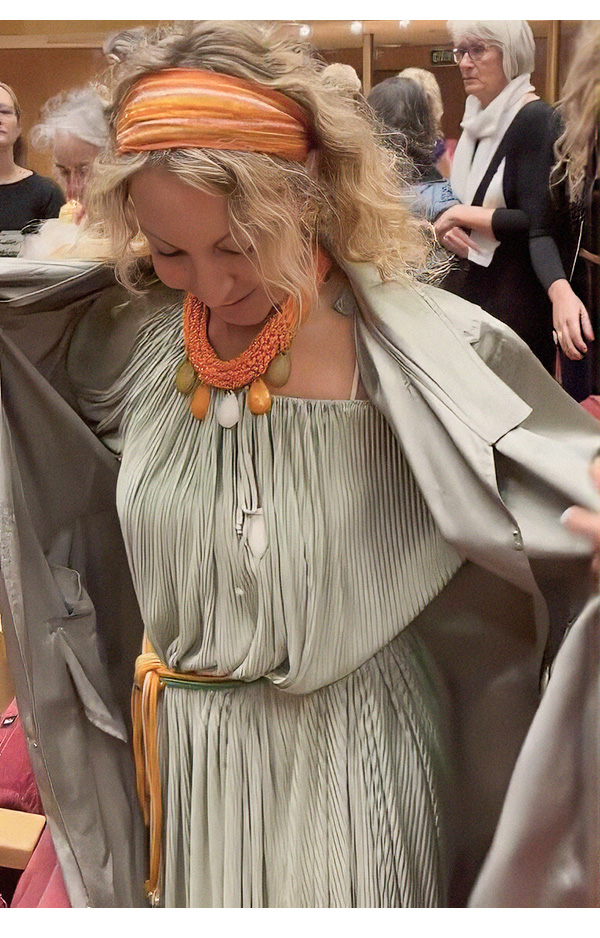
Today, these two garments give the contributor the feeling of wearing pieces that belonged to both parents. They embody family memories and an emotional connection that goes beyond their simple function as clothing.
Isla also explains that she inherited a dress from her mother. Before it was passed down, one of her mother’s friends had worn it to her hen party. Today, the dress accompanies new occasions: it is used as a costume for a theatre production and will also be worn to university galas.
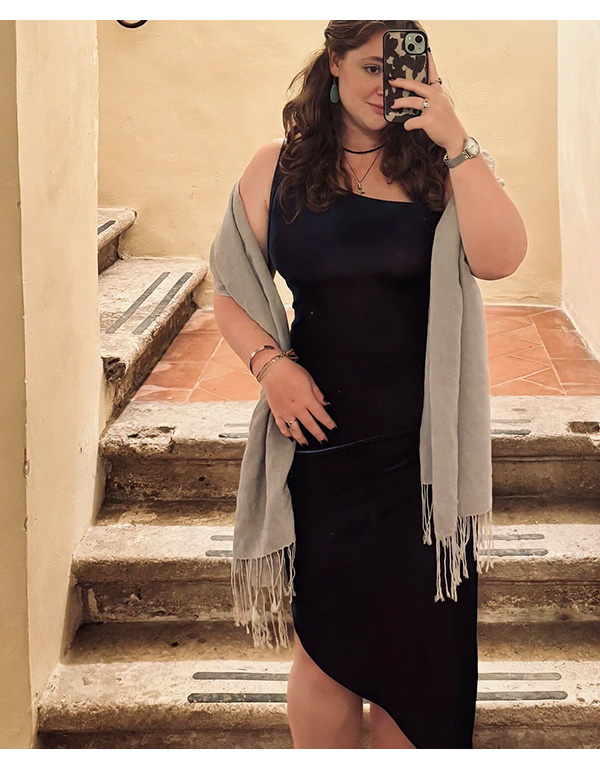
Another person received a jacket-and-skirt set from her mother, who had worn it just once, in 2001, for her civil wedding in France. After spending more than twenty years in a wardrobe, the outfit was given to her daughter when she moved to Paris. Her mother told her: “That way, you’ll look like a real Parisian!”
The garment changes hands, but retains the memory of a family event. It now accompanies a new chapter in someone’s life while preserving the memory of her mother’s wedding.
Objects passed down can also be valued more for their history than for their function. A Chanel bag given by a mother continues to be used and cherished by her daughter. A leather jacket received from a father, meanwhile, brings back memories of the money he saved when he was young in order to buy it.
Cultural heritage passed down through clothing
The passing down of clothing sometimes extends beyond the immediate family. Some garments also tell stories of culture, traditions and craftsmanship passed down over time.
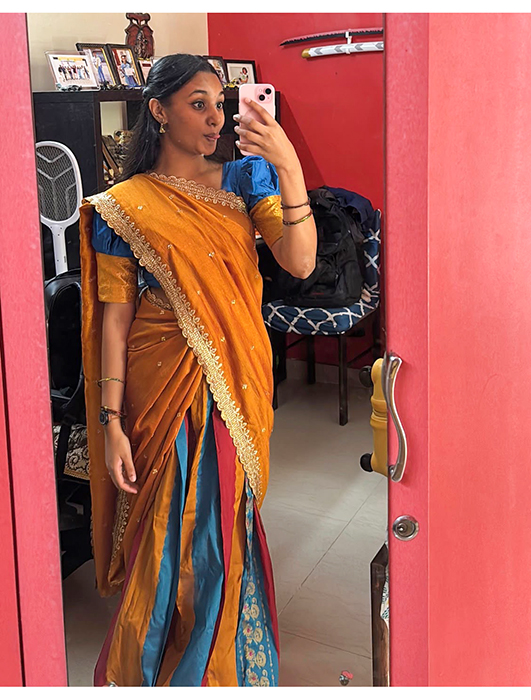
Lakshita shares the story of a traditional skirt from southern India, made by her grandmother from a family sari. What was originally a long piece of fabric became a skirt, sewn by her grandmother. Beyond the garment itself, this piece reflects a clothing tradition and a form of family craftsmanship.
Another testimony concerns a tracksuit produced entirely in France. The brand donates 10% of its profits to the people of Gaza. For its owner, the garment carries an important cultural significance and holds strong emotional value.
These stories remind us that clothes can carry identities, traditions and values. They help preserve cultural memory and keep it alive in everyday life.
When a garment becomes irreplaceable
Attachment to a garment can also stem from a personal relationship that is not necessarily based on family inheritance.
One woman explains that she received a dress handmade by her best friend, who is a seamstress. She says she does not want to part with it because of the strong sentimental value it holds. The garment is therefore a reminder of a friendship and a personal gesture.
Others describe clothes associated with more individual memories. One man recalls buying his very first shirt for an end-of-year party at high school. He still wears it today for special occasions. Despite the years that have passed, he still finds it too beautiful to throw away.
Another person keeps a jumper to which they are particularly attached and which they continue to wear. For them, the garment represents an important emotional memory.
Conversely, some testimonies express regret at not having been able to keep a garment they deeply cared about. One person remembers a red dress with flowers that she loved wearing as a child. When she grew up and could no longer fit into it, her mother decided to give it away. She explains that she remained sad for a long time, because she would have loved to keep it and one day pass it down to her own children.
This final testimony shows that the sentimental value of a garment can sometimes become fully apparent only once it is gone.
Much more than a garment: A story to pass on
These stories make one thing clear: inherited clothes, or garments kept because of their history, occupy a special place in our wardrobes. They are not always the newest, trendiest or most financially valuable pieces, but they are often the ones we feel most attached to.
A jumper can remind us of a mother, a jacket can bring back the memory of a grandfather, and a dress can tell the story of several generations of women. These garments become witnesses to our family histories and the bonds that connect us.
In a society where collections change rapidly and clothes are often considered replaceable, these stories offer a different way of thinking about our relationship with clothing. They show that the value of a garment can grow over time, through the passing down of clothes and the memories they accumulate.
Ultimately, inheriting a garment means receiving much more than an object: it means carrying the memories of those who came before us, receiving a fragment of someone’s story, and choosing to keep wearing it.
CircuFash is an Erasmus+ Project co-funded by the EU