
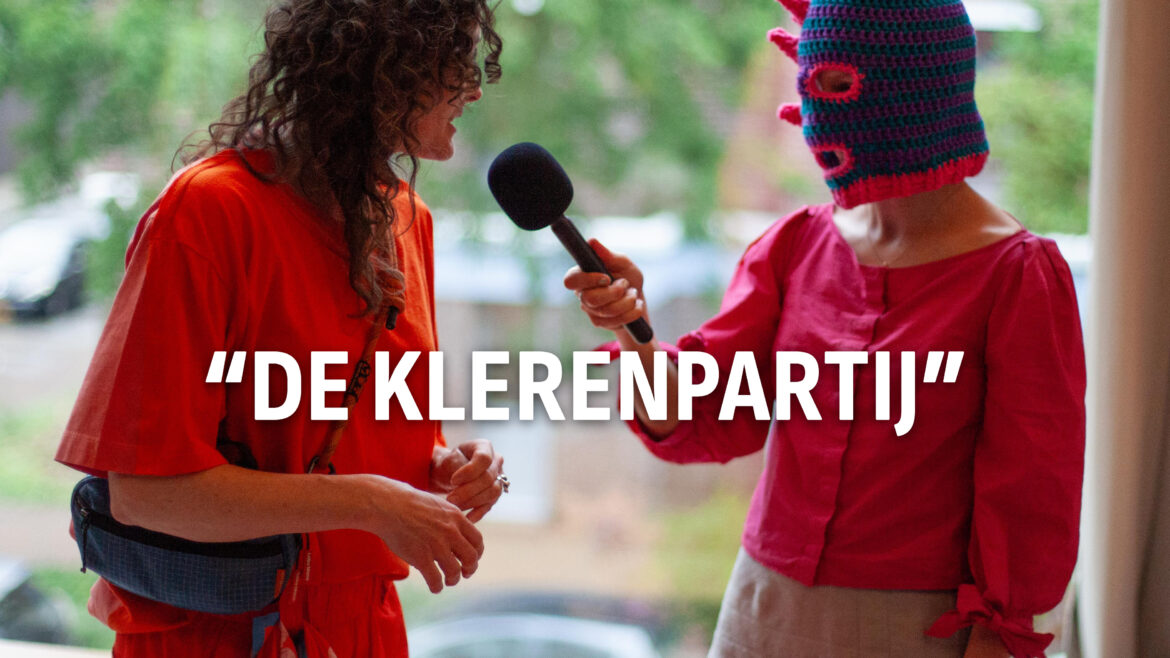
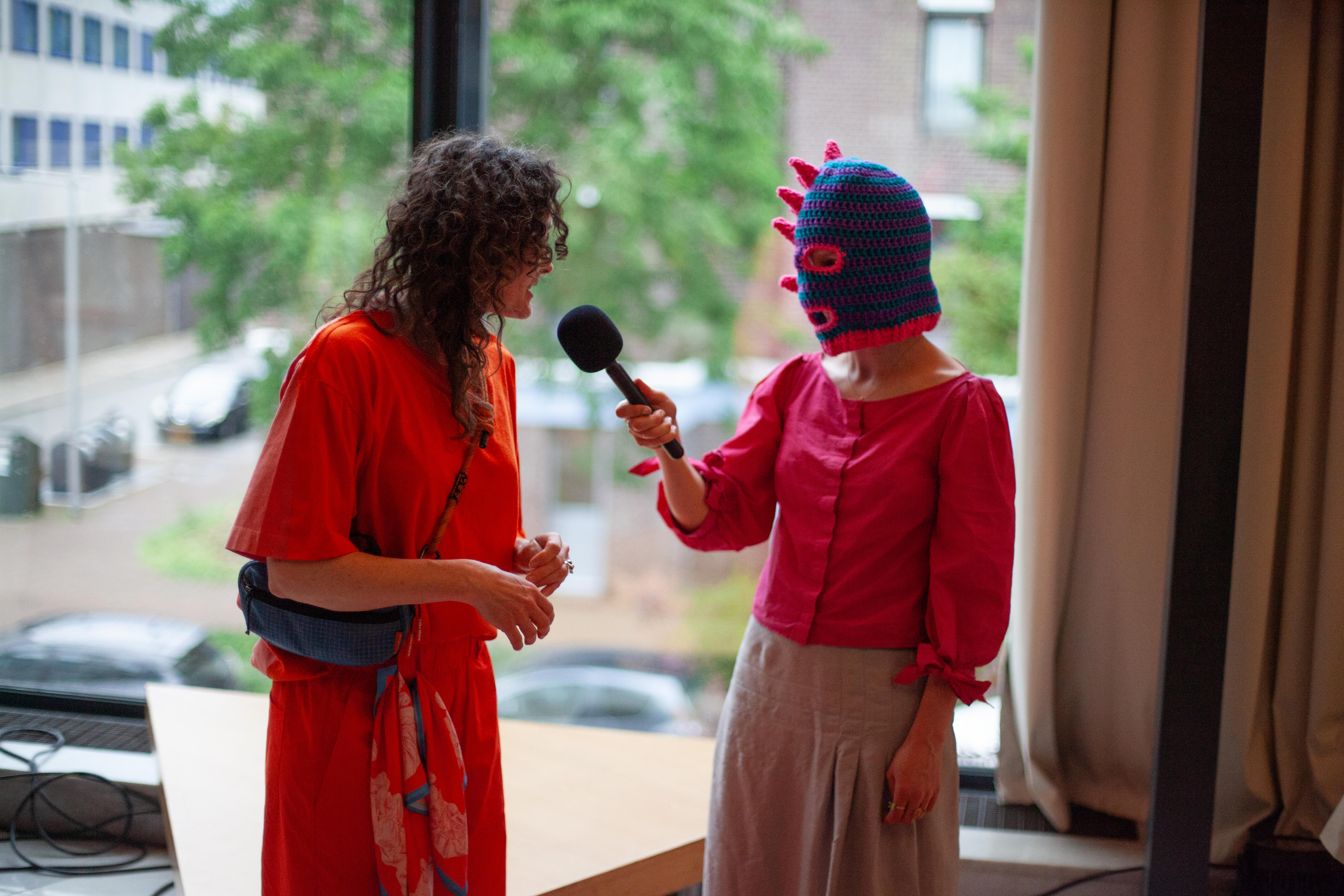
“De Klerenpartij”
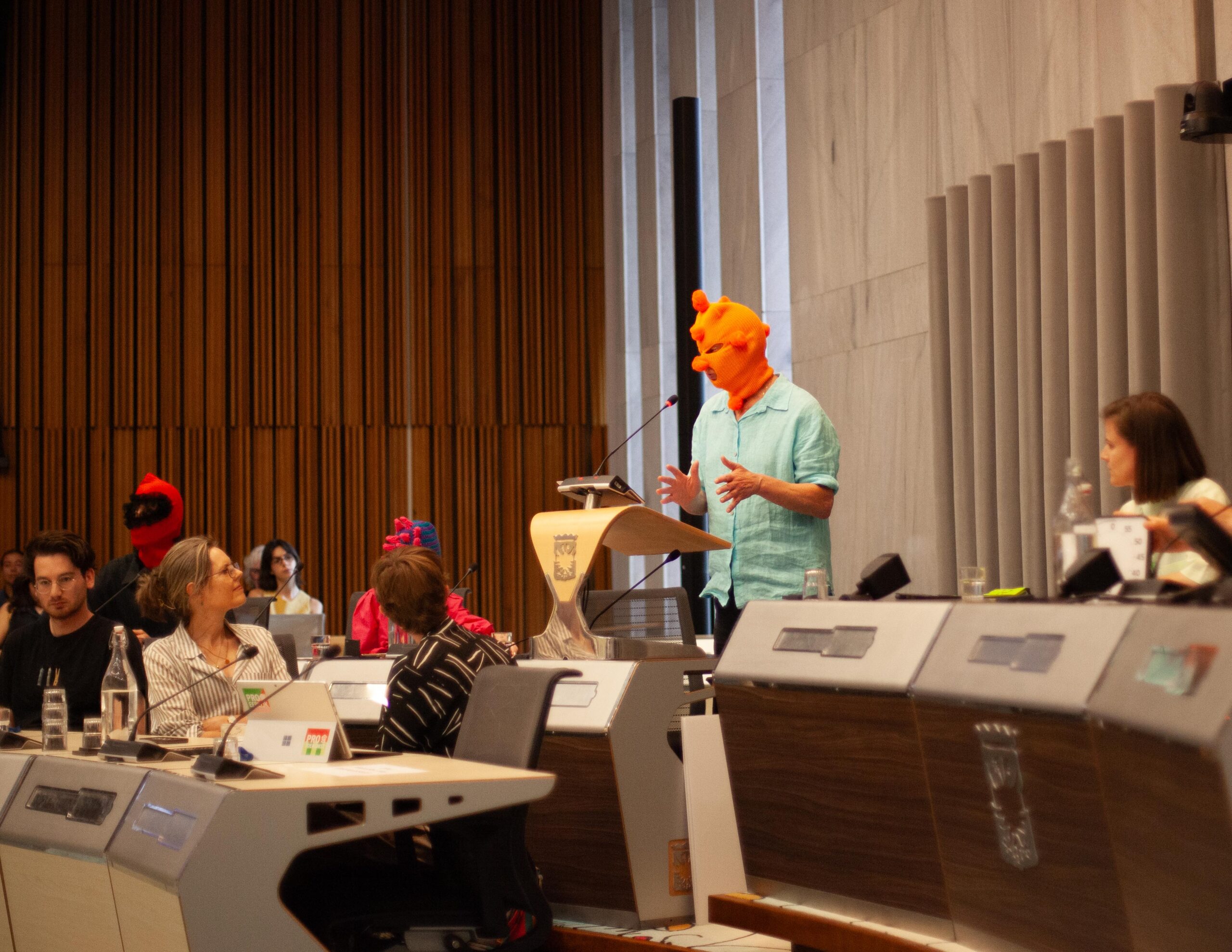
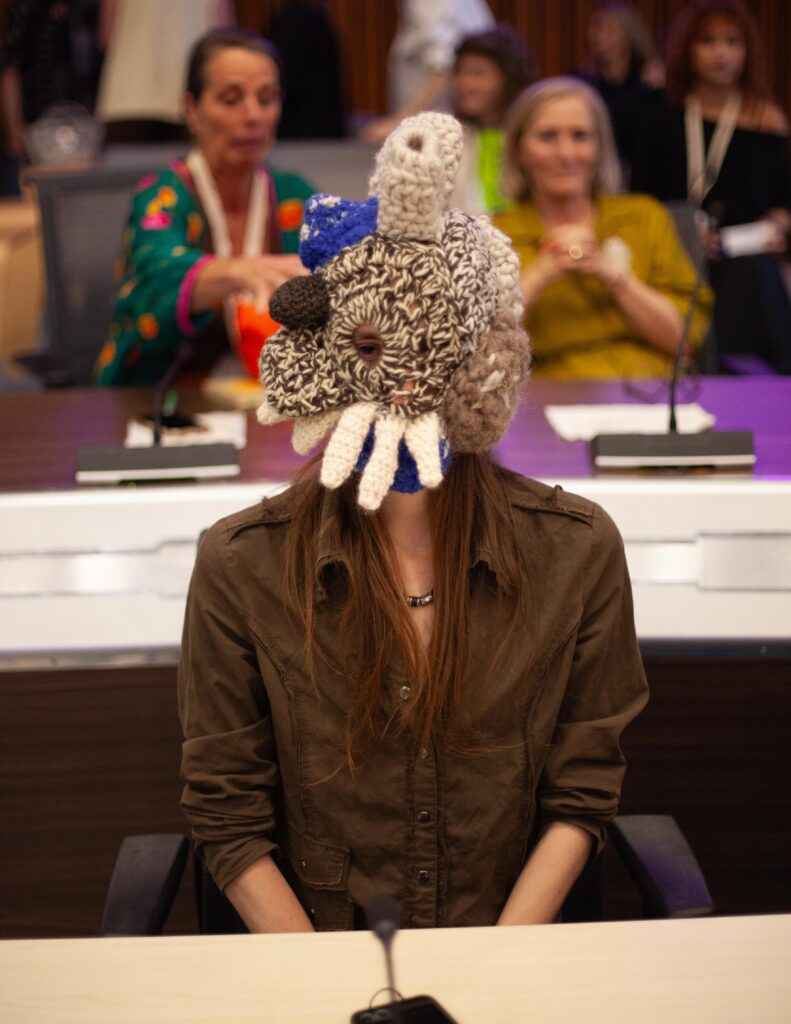
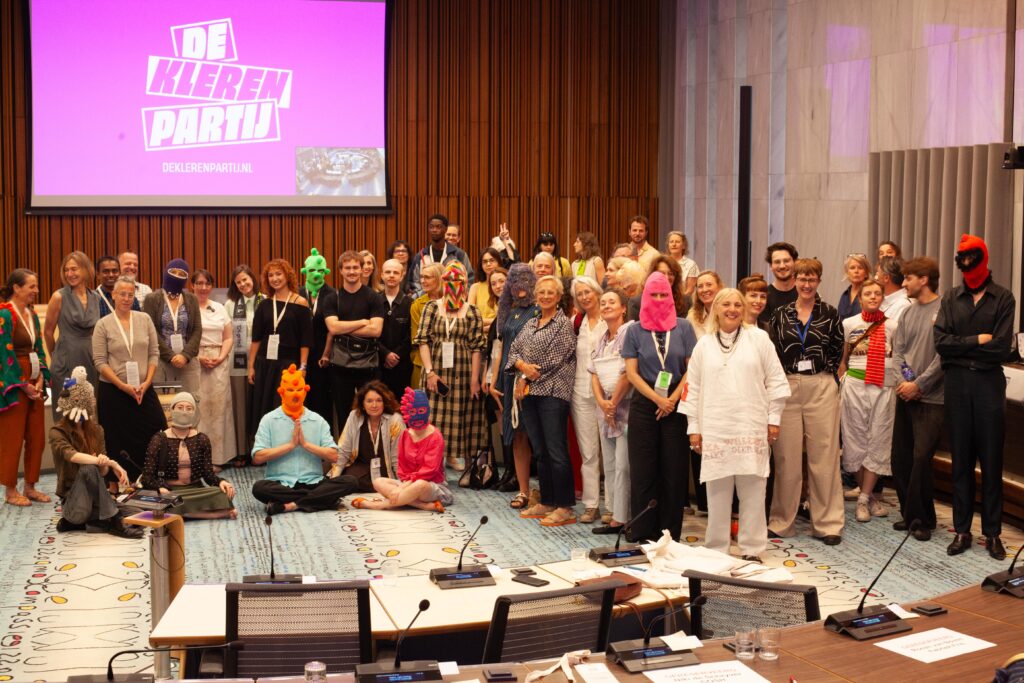
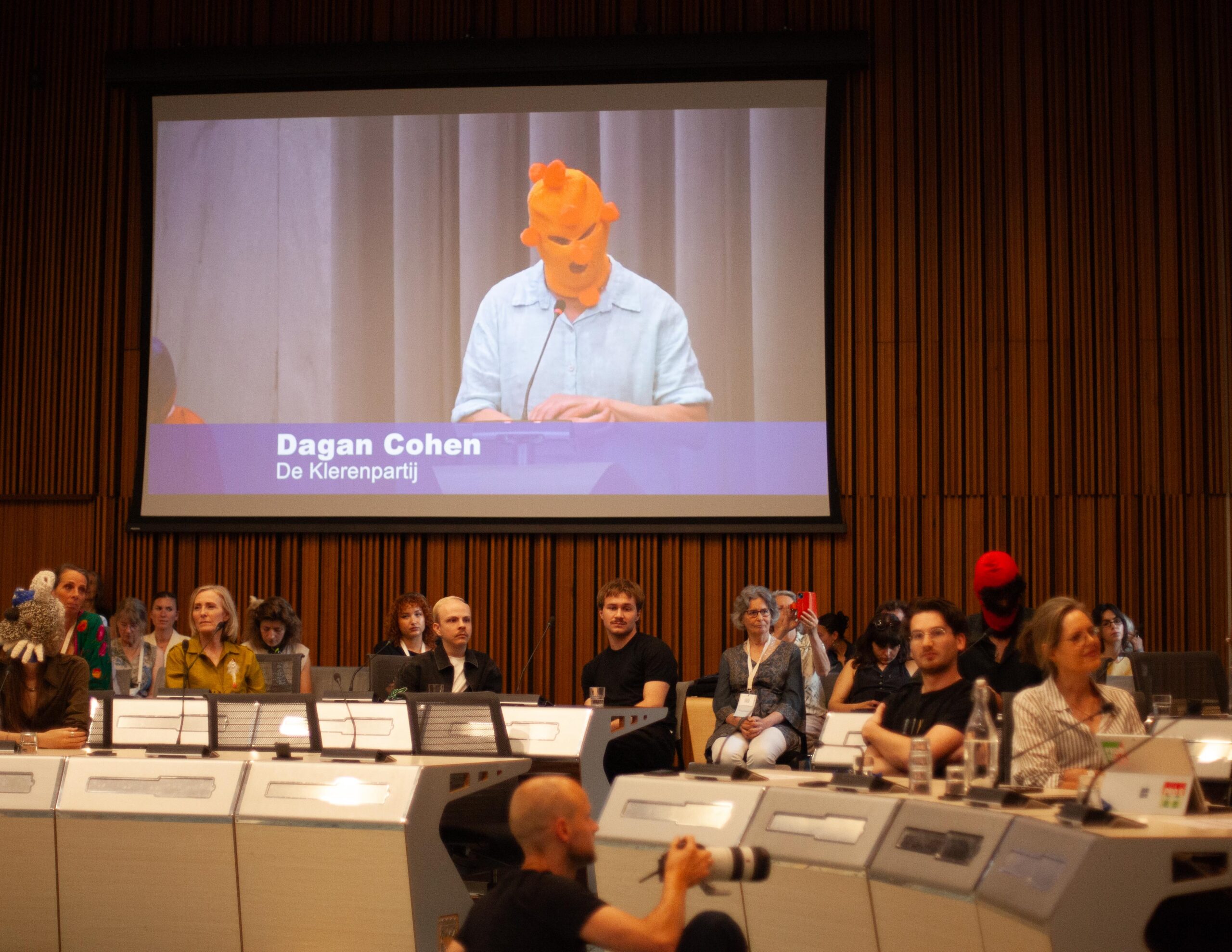
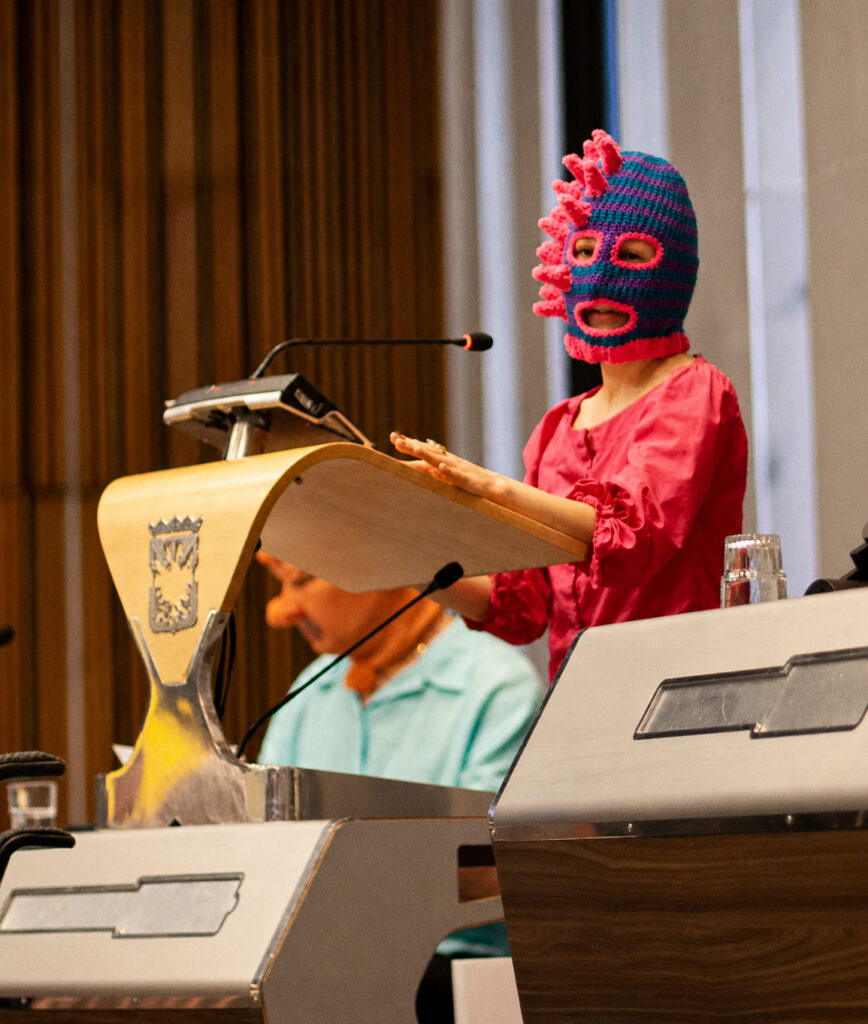
At the State of Fashion Biennale* 2026 on 29 May in Arnhem’s council chamber, the Clothing Party (“De Klerenpartij”) presented a series of motions advocating for a fairer and more sustainable clothing and textile system. Developed collaboratively with over twenty pioneers from the fashion and textile sector, the motions focus on education, local circular infrastructure, and municipal responsibility.
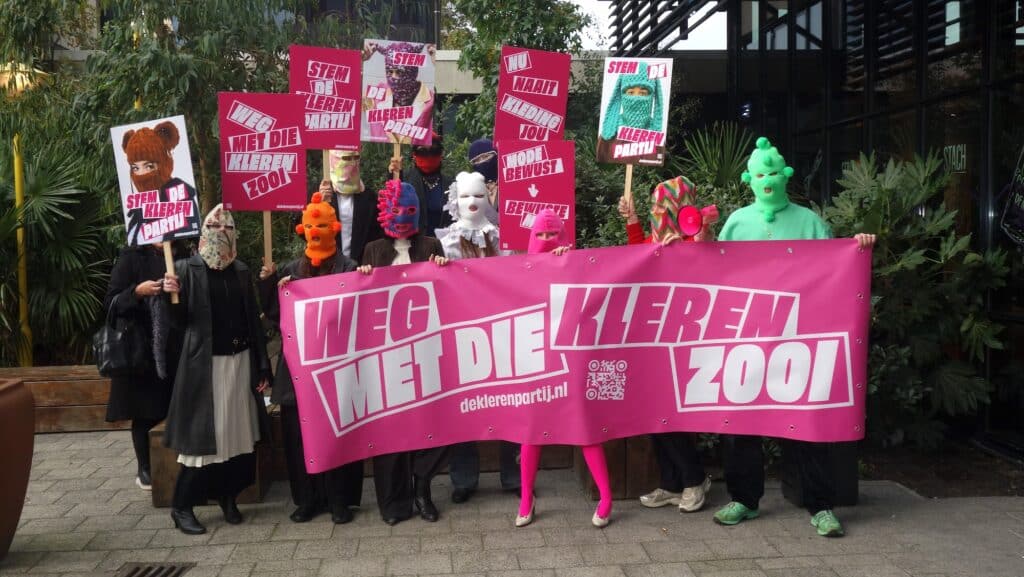
De Klerenpartij is a public initiative
by designers Billie van Katwijk and Dagan Cohen in collaboration with the Amsterdam Fashion Institute (AMFI), ArtEZ, and the Research Community New Tex Eco. The party sees itself as a ‘creative crowbar’ for cultural change around clothing – from a throwaway culture to a culture of making.
They stand for sustainable clothing
- They stand for sustainable clothing that does justice to people and planet.
- For craftsmanship instead of mass production.
- For connection instead of waste.
- For an economy based on care, not sweat.
Motion 1: Promote Clothing Awareness and Practical Skills
The first motion emphasises education and citizen engagement. It proposes teaching primary school pupils practical textile skills such as sewing, knitting, and crocheting. Secondary school students would be introduced to the entire textile value chain through visits to farms, design studios, weaving mills, sewing ateliers, retailers, repair hubs, sorting centres, and recycling companies. The motion also calls for greater visibility of sustainable clothing alternatives in Arnhem, including second-hand shops, clothing swap initiatives, repair spaces, maker hubs, and digital platforms that encourage more conscious consumption.
Motion 2: Strengthen Local Circular Textile Infrastructure
The second motion focuses on supporting circular entrepreneurs and community initiatives. It advocates providing affordable spaces for all stages of a local bio-circular textile chain, ranging from organic raw material production and material laboratories to repair centres and recycling facilities. In addition, it proposes subsidies, accelerator programmes, and growth support to help circular businesses become economically viable over the long term. The motion further argues for a fairer competitive environment by ensuring sustainable entrepreneurs have access to visible retail locations and subsidised public advertising.
Motion 3: Apply Circular Textile Policy Within Municipal Operations
The third motion calls on the municipality itself to become an active example of circular textile practice. It proposes that municipal organisations purchase only locally produced bio-circular workwear and interior textiles and collaborate with local repair services for maintenance. The motion also suggests embedding circular textile practices into municipal workplaces through clothing swaps, repair stations, workshops, and educational activities led by local sustainable fashion initiatives. Finally, it recommends using professional development budgets to train civil servants in circular textile knowledge and practical making skills.
*State of Fashion is a platform for showcasing alternatives to the current fashion system. We connect fashion, explicitly and honestly, with the societal questions and challenges of our time. Our leading question is how fashion and textile can contribute to a better world?
Pictures by Lois Cohen